Semax & Selank: Neuropeptides in Research For laboratory and research use only. This article summarises published scientific research on Semax and Selank. Neurovia peptides are not intended for human consumption. See our disclaimer. Semax & Selank: Nootropic...
What a Peptide Cold Chain Review Should Verify A peptide cold chain review is not a review of whether a box arrived cold. It is an assessment of whether a research material remained within its defined handling parameters from release through receipt, and whether the...
KPV: What the Research Shows For laboratory and research use only. This article summarises published scientific research on KPV. Neurovia’s KPV is not intended for human consumption. See our disclaimer. KPV: What the Research Shows KPV peptide is a naturally occurring...
Longevity Peptide Trends Reshaping Research Longevity peptide trends are moving away from broad anti-aging narratives and toward a more disciplined question: which molecular pathways can be measured, reproduced, and meaningfully characterized in controlled research...
MGF Peptide: What the Research Shows For laboratory and research use only. This product is not intended for human consumption, veterinary use, or medical applications. See our disclaimer. Mechano Growth Factor — commonly referred to as MGF peptide — is among the more...
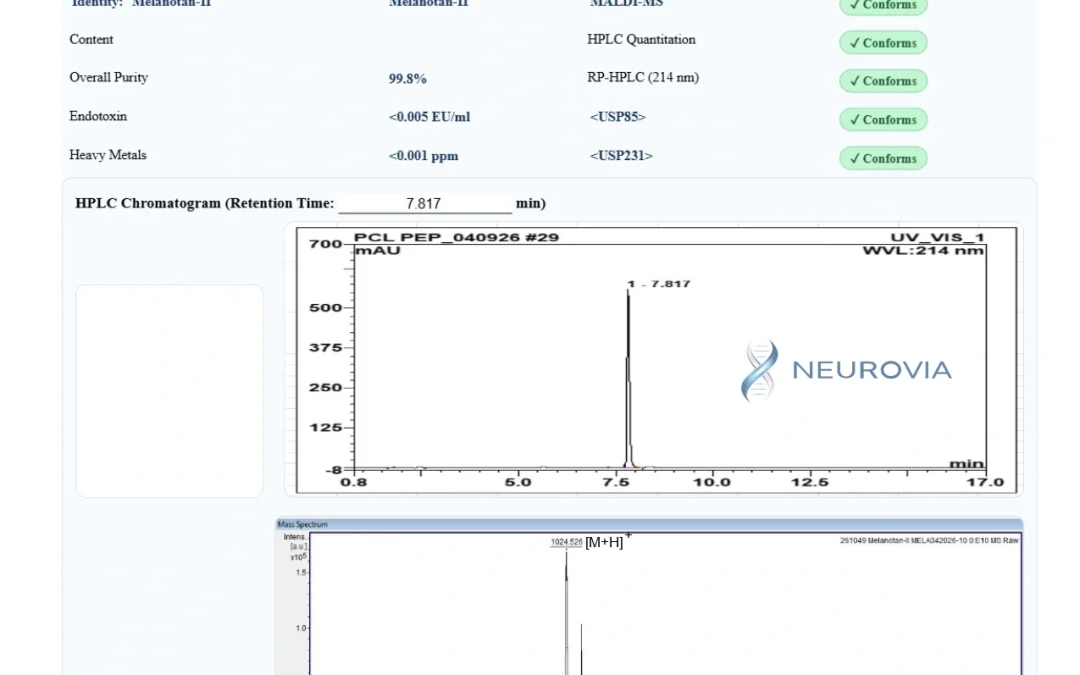
PT-141, Melanotan 2 & Melanocortin Research Peptides For laboratory and research use only. This article summarises published scientific research on melanocortin receptor peptides. Neurovia peptides are not intended for human consumption. See our disclaimer....