by neuroviapeptides | Aug 26, 2026 | Longevity & Regenerative Research, Research
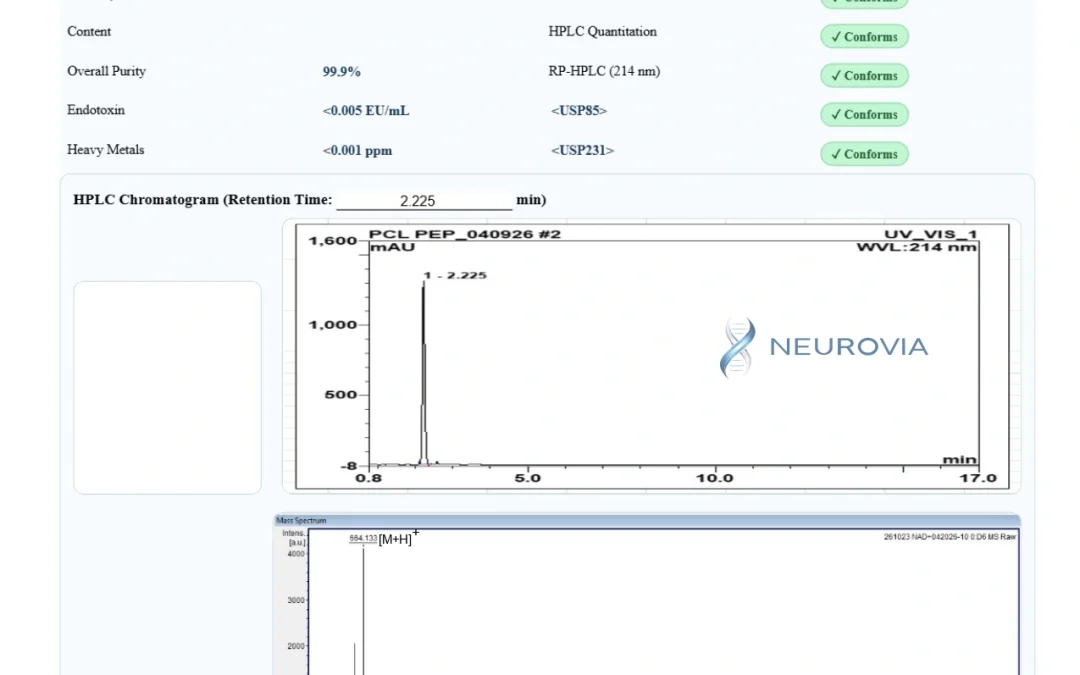
NAD+: The Research Behind the Molecule For laboratory and research use only. This article summarises published scientific research on NAD+ and related compounds. Neurovia’s NAD+ products are not intended for human consumption. See our disclaimer. NAD+: The...
by neuroviapeptides | Aug 24, 2026 | Immune System Research, Research
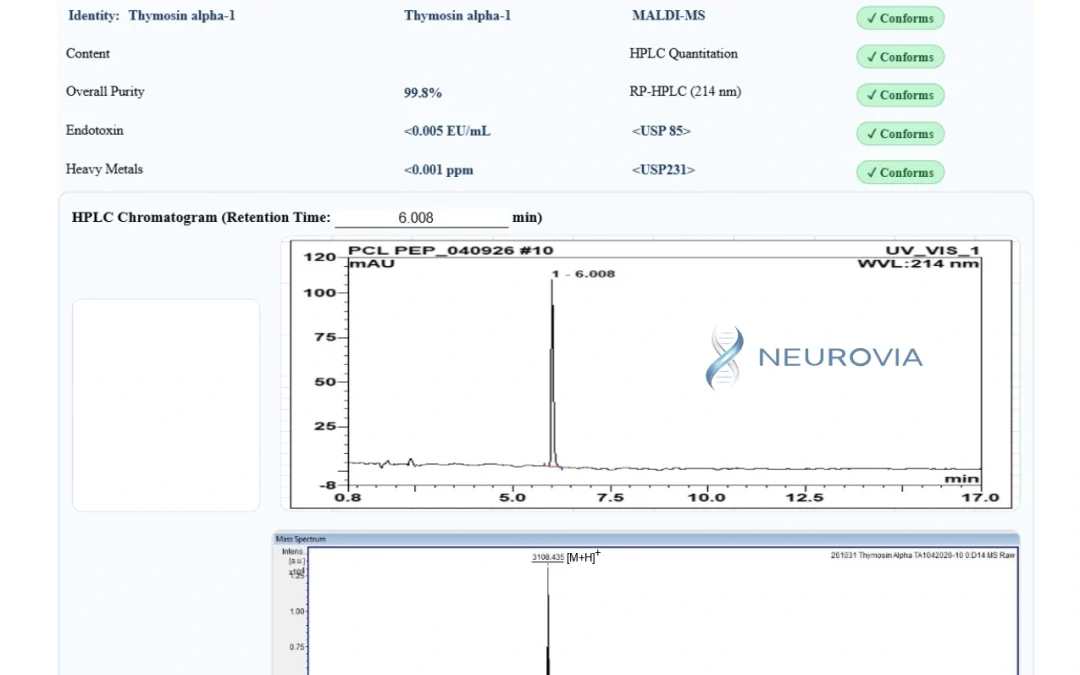
Thymosin Alpha-1: What the Research Shows For laboratory and research use only. This article summarises published scientific research on Thymosin Alpha-1. Neurovia’s Thymosin Alpha-1 is not intended for human consumption. See our disclaimer. Thymosin Alpha-1: What the...

by neuroviapeptides | Aug 13, 2026 | Research, Research Fundamentals
GMP Versus Non GMP Peptides and Quality A peptide can present a high assay result and still be a poor fit for a controlled research workflow. That is the practical issue behind GMP versus non GMP peptides: the comparison is not limited to a single purity number. It...

by neuroviapeptides | Aug 12, 2026 | Research, GLP-1 & Weight Research, Research Fundamentals
MOTS-c Research Requires a Precision Framework MOTS-c is frequently discussed as a mitochondrial-derived peptide with relevance to metabolic stress signaling, but that description is only the starting point for serious laboratory work. For researchers, the central...

by neuroviapeptides | Aug 11, 2026 | Research, Research Fundamentals
Peptide Supplier Evaluation Checklist for Labs A peptide that arrives with an impressive purity claim but no batch-specific analytical record creates a preventable problem: your laboratory must spend time establishing facts that the supplier should already document. A...

by neuroviapeptides | Aug 10, 2026 | Longevity & Regenerative Research, Research
Glow Is Not a Metric in Peptide Research A photograph can suggest a visible glow, but it cannot establish what changed, why it changed, or whether the observation can be reproduced. For laboratory researchers evaluating peptide-related aesthetic or longevity pathways,...

